By Jim McCrae BCHBC co-founder and honorary lifetime member
Fifty years of riding in the backcountry inevitably involved some challenging and sometimes dangerous situations. I would like to share some of those experiences. Perhaps someone, sometime, somewhere will avoid some hard lessons I learned the hard way.
Buddy ropes. To handle horses and mules we use lengths of material. Lead ropes, halters of various types, reins, lines, and many other restraints. A buddy rope really shines in instances where a little distance between you and a wreck is good, and you can still get close enough to help out. It’s like taking first aid training. Most likely it’ll help others more than yourself. Thirty feet of nylon with a loop at each end is my preference. Its soft and pliable and hard to throw- not like the stiff lariat that cowboys use but it doesn’t get caught up in brush or flip around. I use a quick release double bow knot to tie it on my front right saddle strings. When I’ve needed it, I needed it fast. I’ll give you a couple of examples.
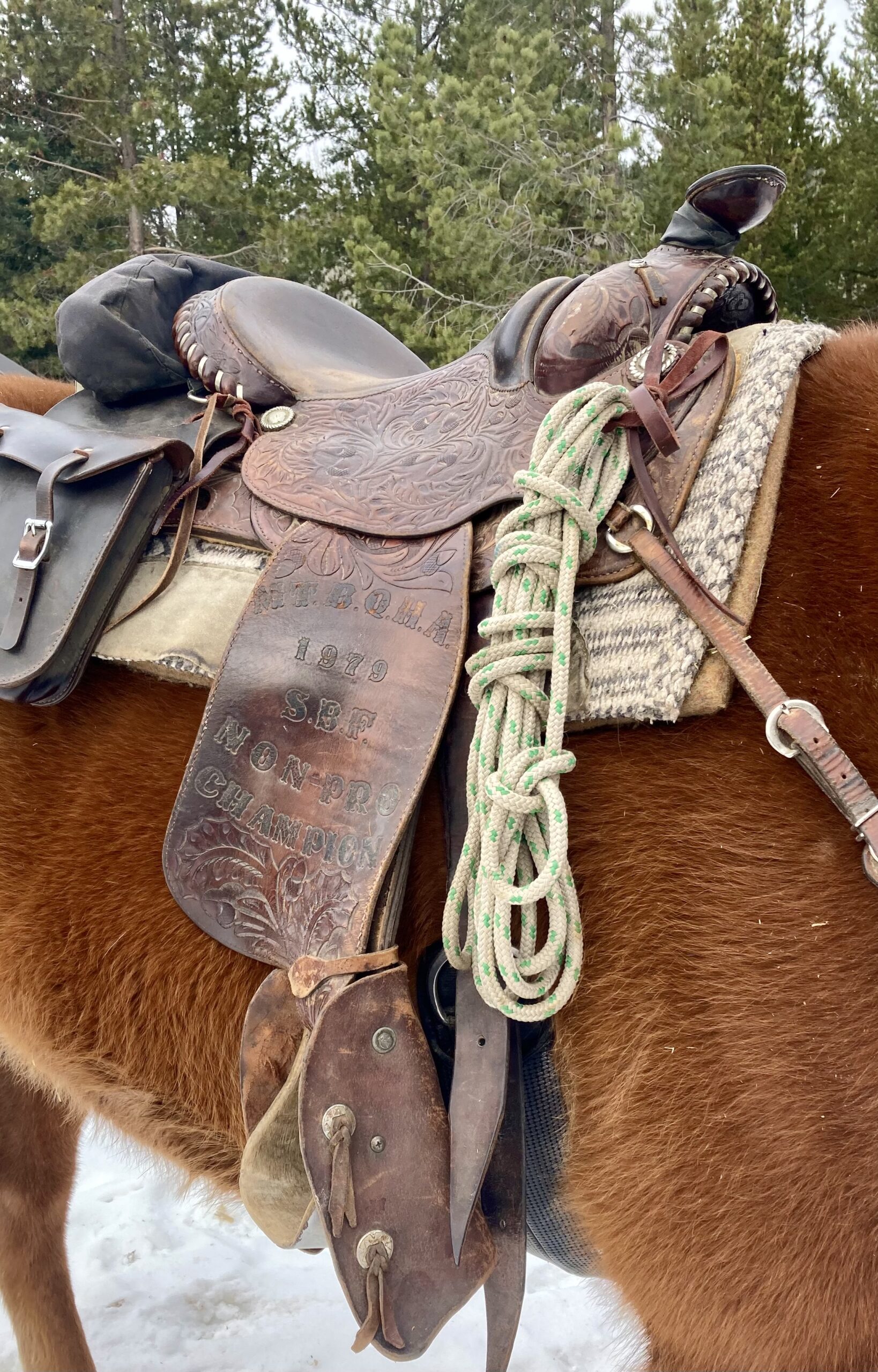 A buddy rope. 30 feet of rope, tied and ready for action.
Three of us were riding up along the Muskwa River looking for a place to ford. I was last in line when suddenly the bank collapsed under the rider in front of me, dropping him and his horse into cold, deep water. Perhaps due to her ancestral memory the mare was not good in water and a lot of floundering was happening. The bank was a straight drop, so I quickly turned downstream to try to help. I grabbed my buddy rope and waded out into the river. Luckily the rider had managed to get to the bank, but the mare came floating around a bend toward me. Nice. I didn’t have to decide which to help. The mare wasn’t struggling and appeared to have just given up. I made a long loop and managed to get it around her head on the first try. Good thing as the current wasn’t going to give me a second chance. A quick dash to a tree on the bank and the mare was secured and swept against the bank. Still no struggling. Definitely a poor horse for that country and a wet place to unsaddle and drag her up onto the dry bank with my horse – using the buddy rope. Maybe she’d have survived on her own or maybe got caught up in some sweepers. The buddy rope certainly came in handy.
On another trek, again in the north, we were dropping down along the Warneford River after having crossed Bedeaux Pass. We got suckered into following the main channel and ended up dead ended at the confluence with a side channel. My horse, pack mule and I crossed to the main bank, but it got uncomfortable. Trying to scramble up the slippery bank just wasn’t working. My mule, riding high with nearly empty boxes turned and swam back and recognizing his good judgement, we were following when my horse suddenly went under. His leg or legs were ensnared. I slipped off into the cold deep water. We were in deep trouble. My horse floated unless he struggled, which would pull his head under. Now I really needed a buddy rope. It was on my saddle on the opposite side and under water. I wasn’t eager to get that close to my good friend and besides I’m a poor swimmer. I was yelling for my partners to get me a rope in one direction while talking softly in the other to reassure my horse. No buddy had a buddy rope! A lash rope and a couple of lead ropes tied together were the best they could do. I swam to the bank and then struggled back out to tie it on. I found it was very challenging to tread water while trying to tie a knot but managed and soon my horse was freed and heading for the bank.
Now I always encourage future partners to carry a rope for emergencies and leave a halter on under the bridle with a lead rope attached.
May your trail not be a trial!
Next month safety tip #2…Chaps and Bras!
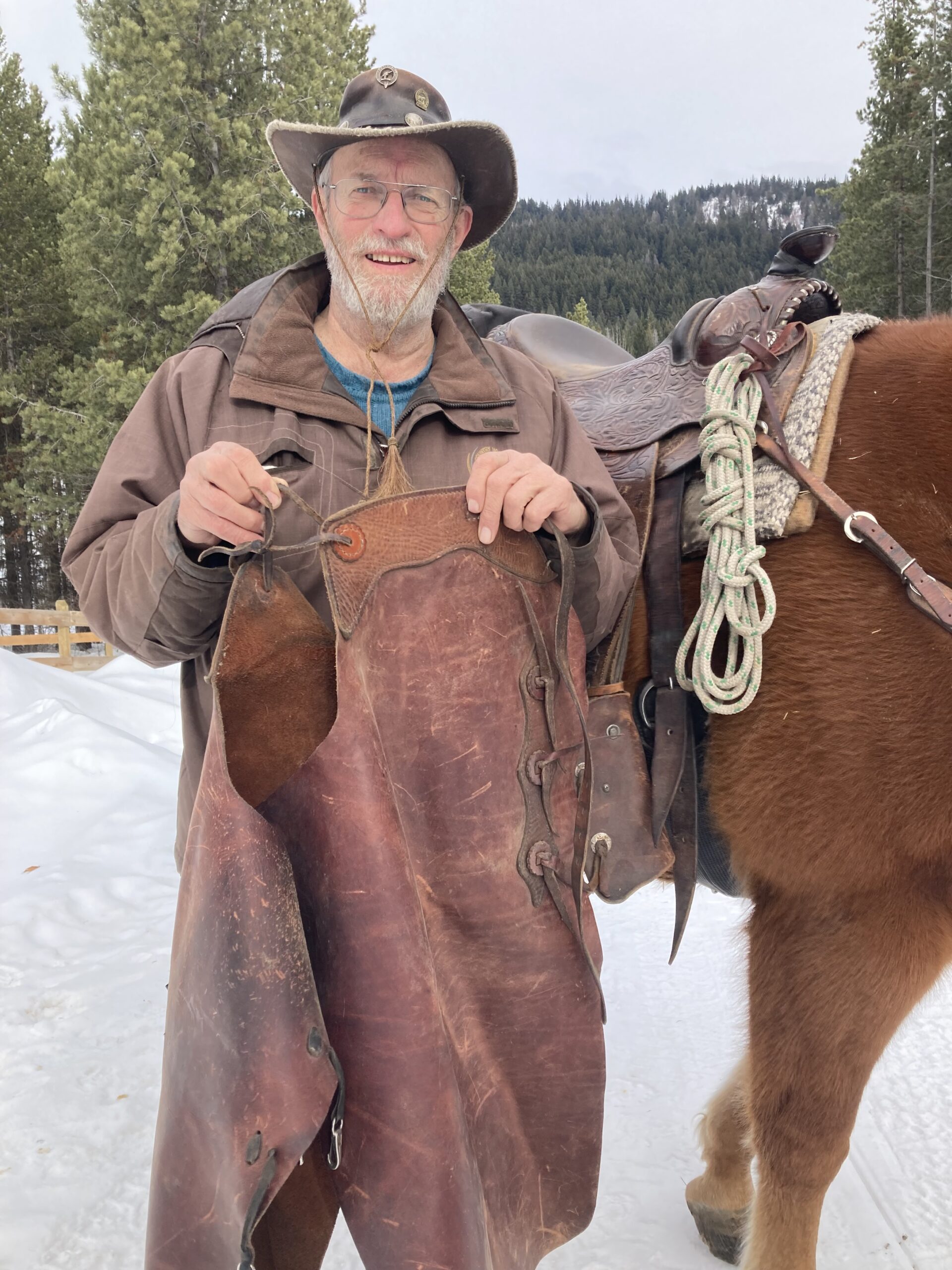 Jim will write next month on Chaps and Bras.
Photo credits; Sheila Sowerby
 BCHBC is privileged to have Saddle Up Magazine as ‘the official voice’ of our province-wide organization. We value this partnership and encourage you to check out Saddle Up magazine online and consider supporting this BC-based publication by purchasing a subscription. You may also pick up printed copies of Saddle Up in 156 cities/towns with 340 outlets, mainly in BC and Alberta, as well as other parts of Canada and the US. It’s free!
Read the July issue of Saddle Up, including the BCHBC story. Or enjoy our feature story here.